

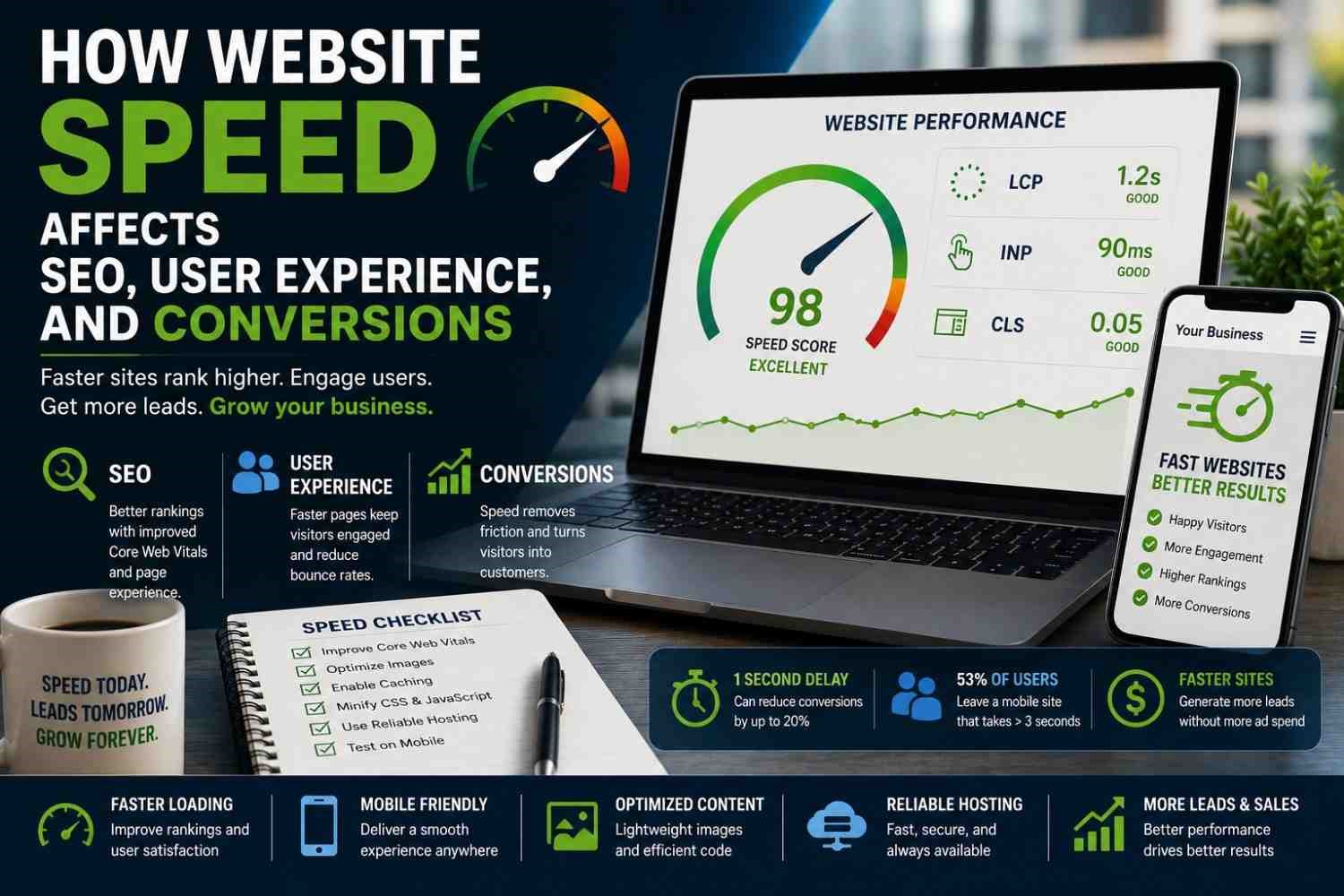
The speed of your website can practically play a crucial role in every phase of the customer journey: that is, from search visibility which generates leads.
Visitors expect almost instantaneous loading of pages - slow websites frustrate and reduce their engagement.
When it comes to analyzing a website based on how the user perceives a webpage, search engines are also incorporating page experience.
Practical insight: Choose speed improvements that will directly reduce friction for visitors and better your mandate in biz.
Why Speed Matters for SEO
The easy to access-to-crawl sites are in high frequency; they are creator of a better user experience; they maximized engagement metrics in all forms of applications; they are frequent rankers in search engines.
Objective Web Core Vitals are used to gauge a webpage from loading to visual sturdiness and prompt response.
Technical optimization helps the longer-term performance of organic search.
Practical insight: Choose speed improvements that will directly reduce friction for visitors and better your mandate in biz.
The Impact on User Experience
Fast pages that load quickly motivate quick movements to other areas of the site.
Slow pages slow down the motivation to explore more content from the site.
Mobile users are much more intolerant of lateness.
Insightful Help: Leverage that mainly eliminations for all the frustrations visitors experience and possibly find improvements in business results from those experiments where there are speed improvements.
The Effect on Conversions
Increasing the likelihood of abandonment of forms or shopping carts by a user by every second delays.
Often it happens that performance is accompanied with an increment in lead, without the need for more investment in advertising and attains higher revenue and margin from the performance of ads.
Faster websites, in these terms, wring out all potential values from every site visitor.
Insightful Help: Leverage that mainly eliminations for all the frustrations visitors experience and possibly find improvements in business results from those experiments where there is a speed improvement.
Content Angle: Website Speed Priorities
The bar chart here focuses on the optimization areas possible that have the immense bearing on SEO, user experience, and conversions.
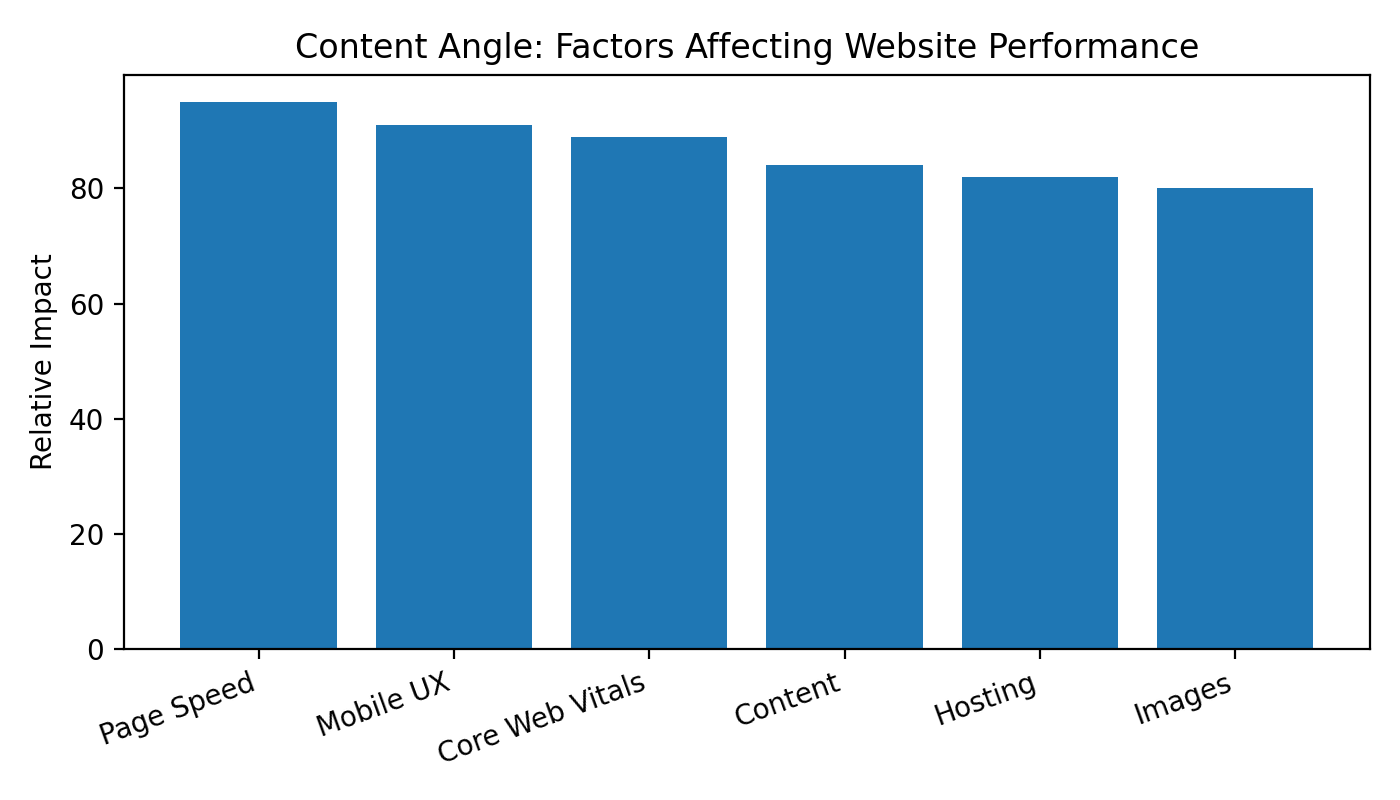
The key lesson to take away from the account is that speed boosts can come from tweaks to Core Web Vitals, mobile usability, image optimization, reliable hosting, and efficient website code.
Expanded Insights
Core Web Vitals
Google controls how fast a page loads, responds, and stays put on someone's screen; it does this because the end user also judges these metrics.
Action step: Every quarter, review the area and implement minor changes based on analytics and evidence from real users.
Image Optimization
Conduct compression of large images, use the latest file formats, and also add lazy load to reduce the size of your web pages.
Action step: Every quarter, review this area and make small, step-by-step improvements through tests and input on a real well-used base online.
Hosting and Infrastructure
These include things like more reliable hosting, caching, CDNs, and fault tolerance across many areas.
Action step: Reanalyze this anytime at every quarter and take slow-step improvements piecemeal on it with real evidence and feedback from actual users.
Continuous Monitoring
Site performance is a moving target. Periodic reviews will help you find the new problems before they significantly affect the ranking or conversions.
Action Step: Go through this area once in every quarter and introduce some form of complimented increment in analytics and actual user data.
Website Speed Optimization Checklist
- Improve Core Web Vitals.
- Compress and properly size images.
- Enable browser caching.
- Minify CSS and JavaScript.
- Use reliable hosting.
- Reduce unnecessary plugins.
- Monitor page speed monthly.
- Test performance on mobile devices.
FAQ
Does the speed of the website affects Google rankings?
Yes, speed is part of the whole related to the functionality as well as satisfaction of the user.
Comparably, what is page load time for faster?
Try to keep the time within two to three seconds or less on an average when it comes to page loading.
However, will an increase in speed will result in more leads?
Yes, slower speeds would mean abandonment is minimized, in addition to improving conversion rates.
Call to Action
Improve your site with technical SEO, web development, hosting optimization, and conversion-focused design from Link2City. Let's make an appointment for a full-site speed audit.