

What is PPC management for small businesses?
This is just a part of Paid Social Advertising or Google Ads for Small Business: Which Is Better? explaining how to improve the pay of spending comparisons more closely and much enhanced search results. Let's think of them in terms of what you need to work around right away.
Pay-per-click management was defined as the process of managing a company's pay-per-click advertising expenditure. Regularly, it involves monitoring, tweaking cost budgets and bids to produce better results from the ads; in other words, the return on investment (ROI) is fully achieved. Experienced pay-per-click management is critical for small business and can offer a fast way of attracting narrowly specific web-based traffic cost-effectively.
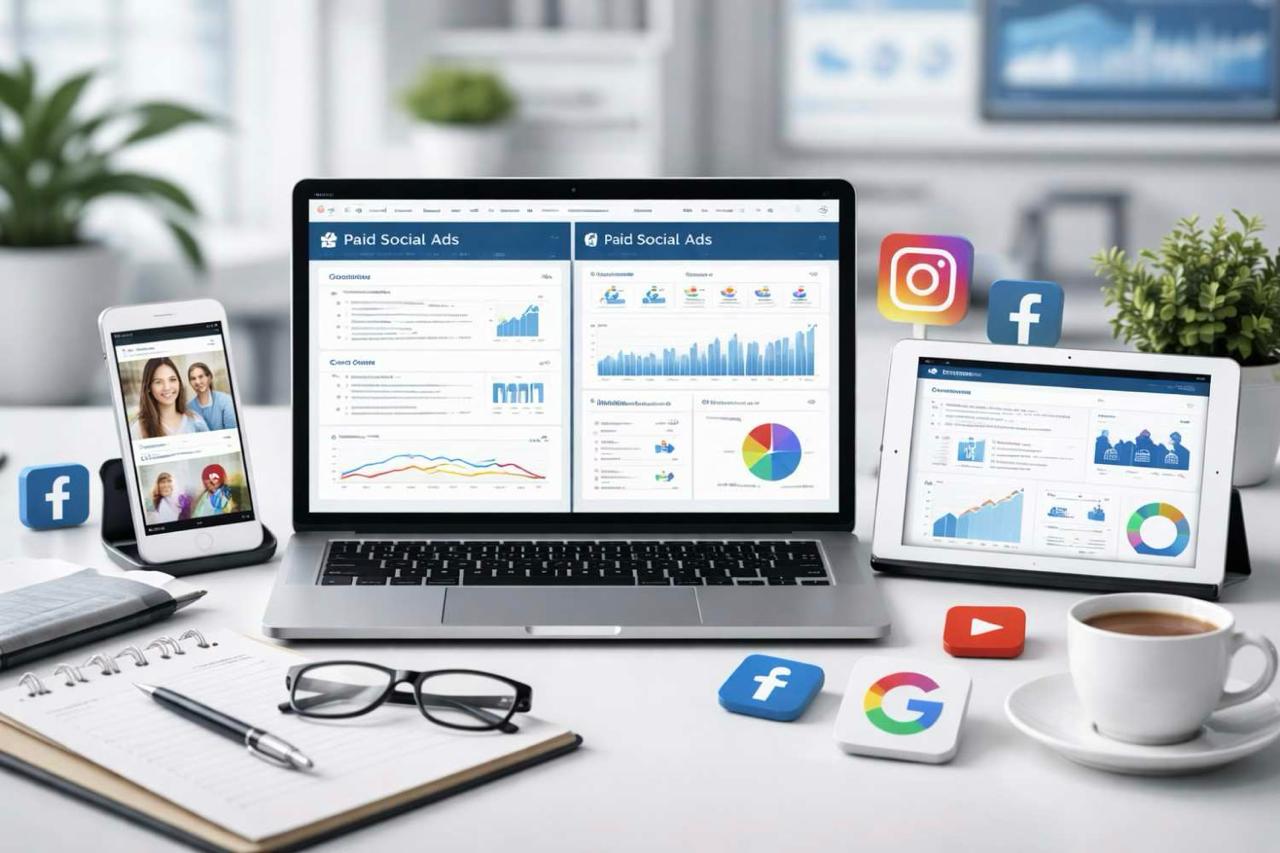
Among a few to mention - Google Ads has some of its important platforms under it like search and display networks whereas social channels like Facebook, Instagram, and LinkedIn are important ad functionalities on these platforms, commonly known as paid social ads. Operating on many different networks can be quite time-consuming and requires strategic planning as well as individual expertise due to the unique advantages and intricacies that each of these platforms provides for PPC management.
Why PPC management for small businesses Matters for Paid Advertising Strategy
Understand the role of PPC management, especially as it relates to the performance of paid advertising comparison for small business: it makes or breaks the success of your advertisement. Good strategy may drive high standard traffic towards your website, capitalize on potential leads, and exist as a brand in the online world.
All small businesses will be seriously handicapped because they have very limited budgets and resources at their disposal and therefore will need to make the best out of every rand spent in advertising. This applies as well in managing PPC so that the budget is used meticulously, according to many factors-like- market behavior, target audience requirements, and campaign results. The final aim is not just to attract traffic but to transfer traffic into customers at a profitable and sustainable rate.
Now, let's see some of the big platforms for PPC management and let's discuss their pros and cons, especially in relation to small enterprises wanting to extract the most value possible from their advertising investments.
The Benefits of Google Ads for Small Businesses
Google Ads is considered top in online advertising for offering so many opportunities to small companies out there. Search ads are its most used medium-base type, where businesses can publish their ads onto search engine results page while users search for related information. Google search adds, moreover, are highly effective in reaching out to consumers who are the most likely to convert just by their reach and the intent-driven feature.
Ads used in search engines pose a much smaller chance to capture all possible online users; but that's when businesses can really target a search and when their search ads appear by way of Google Ads. This would take care of already warm leads. Those ads make small business ads exhibited among users most likely to buy, thereby increasing conversion chances, let alone having some retargeting options in Google Ads for small business owners wanting to save their services in already bounced traffic leaving their sites.
The Advantages of Paid Social Ads for Small Businesses
Small enterprises can reach audiences in different contexts using paid social ads. Unlike them, for them paid ads are better than TV ads costing a lot annually. Platforms such as Facebook and Instagram offer user-driven targeting options which are so detailed one can target on the basis of behavior and interest. This makes it much easier for companies to serve their ads to a specific demographic, which can be tricky to achieve via Google Ads.
Most social ads today come in engaging and visually appealing formats such as videos, carousels, and stories. All these ensure that they catch the user who is fairly aimlessly browsing at some point. Conversion may not be that strong like for search ads, but social platforms are very good at building brand awareness and establishing engagements with customers.
Real-World Examples of PPC Success in Small Businesses
Let’s look at a few real-life examples of how meticulous PPC management has caused this sort of exceptional result for small businesses. For instance, a local independent bakery had been choosing appropriate keywords and search terms to do with "bread delivery in [town name]"; and then using some of its advertising capital and region-targeted landing pages so that these had exposure by further feedback loops.
Consider another manager, for example, a boutique retail store that thought to use Instagram for its paid social strategy, through ads showcasing its particular collection for the season. By using the visual storytelling of Instagram, together with proper ad copy, and adeptly employing the targeting capabilities of Instagram, it was thereby possible to increase followers and drive high traffic to the website, eventually influencing a purchase uplift among them.
The outcome of these examples is that how successful PPC management gets for small business largely depends as well on the best platform that is Aligned with their marketing objectives. Weigh the pros and cons of each platform as you shall consider what really comes next for each potential assignment vis-a-vis its unique needs in business.
Conclusion
Based on this idea, it is a well-settled principle of sorts that those benefits are offered by both services-Google ads as well as paid social advertising are more or less befitting small businesses for making all the more impact or disturbance in the digital advertising sector. Understanding the strengths and weaknesses of these two platforms, together with good PPC management, a small business can practically achieve their marketing goals and optimize their ad spends.
Understanding how the interplay of these platforms could propel the small business puts into the gut that fact that there should be a strategy to either get into Google search ads conversion or really settle in stories for the ads. That is to say, understanding and identifying your niche on ad-serving in one platform does not make you known in all avenues.
CTA: Ready to get the power of PPC work for you and versus the competitors? Invest a short free consultation at once.
Benefits of PPC management for small businesses
- PPC management for small businesses improves targeting accuracy: PPC helps small businesses improve their chances of reaching any right set of niches and audiences small through advanced targeting tools pinning down the exact customer they want. It also tracks the best ad performance and helps to maximize the return on ad spend, ensuring that an advertising message makes it to the right people most likely to convert. Successful PPC campaigns involve the ability of understanding customer demographics, identifying the purchasing habits and behavior of customers across the internet, and delivering those customers to a site for the purpose of detailed analysis, all being networked and thoroughly targeted using PPC platforms to achieve desirable results.
- Constant support to Growth in Paid Advertising Strategy: For small businesses, PPC campaigns are like a steady stream of prospects. They can slice into the things they need to drive, helping them prepare and focus on the exact kind of business performance that can boost returns within a given fiscal period. This includes the ability of setting aside a designated budget, zeroing in on specific words, and keeping close tabs on which strategy works through performance metrics in line with sustainability. In addition, through PPC management, small businesses can safeguard a specific position in search engine result pages and in social media threads.
- Simple implementation with the right structure: The idea behind PPC advertising may seem intimidating-especially to small business owners who have almost nil knowledge about digital marketing, but PPC management makes advertising a breeze. Managed services and automated tools can streamline the process and make it easy to design ads, manage bids and performance with very few clicks. It is even simpler that even beginners will quickly understand how to use it-let alone newbies. It enables small businesses to get going on creating and running campaigns very quickly and with as little drama as possible.
PPC management for small businesses vs. Alternatives
|
Criteria |
PPC management for small businesses |
Alternative
|
|
Cost Efficiency |
Variable (control over budget allows small adjustments) |
Often requires significant upfront expenditure |
|
Flexibility |
Highly flexible with real-time adjustments possible |
Typically less flexible; changes can take longer to implement |
|
Measurable Results |
Robust analytics tools provide clear insights into performance |
Evaluations may be more subjective and less data-driven |
Implementing PPC management for small businesses in Real Scenarios
Developing a full understanding of one's own market and competitors is critical when embarking on PPC management in small firms. In a comparison between the various paid advertising program options can best discuss where PPC will be most effective; actual research is effective. Platforms such as Google Ads or Facebook Ad Manager permit anyone to make a competitive assessment of the same and give one in on a universe of different keyword opportunities.
A detailed buyer persona must be innovated and labeled to better implement PPC carriageways. Analyzing what and how your targeted audience searches helps you put your thoughts in creative ad copy and select the right ad format, such as image ads to match with a largely visually-driven audience in a platform such as Instagram. Text-heavy ads may serve well in Google search network.
Calculate realistically about the costs that meet your financial abilities: make sure these costs will not interfere with strategic goals. Usually, for small businesses, they will look at past successful campaigns and profit projections, and from there they will plow their budget. Such experiments enable continuous improvement in advertising by testing headlines, calls to action, and graphics for the best response subject to audiences' perceptions.
Processing the performance of these PPC campaigns is done with the help of analytics tools. A good example of the platforms to gain access to metrics on click-through rates, conversion rates, and cost per acquisition are Google Analytics. By knowing those stats and gathering them appropriately, the developed data-driven strategy can be altered frequently.
Strategy iteration should be a continual process and this continuous monitoring and refinement approach must be adopted so that the strategies become more and richer contributing maximally to such models. Ever-changing digital advertising landscapes call for new policies to tread the line with the booming trends up in the market places, and for the intrusion of behavioral changes on the part of the consumers. Frequent updates of the advertising content and targeting strategies often will keep the firm's competitive edge and intensified efficiency. Therefore, advanced techniques, insider knowledge, and the utmost possibility of maximum ROI delivery for campaigns remains to partner with the cream of the crop of PPC managers or agencies. Through the efficient application of all these measures, small businesses are enabled to use PPC management to full capacity and guarantee the growth trajectory of the organization into lasting success.
PPC Management for Small Businesses: A Comprehensive Guide
PPC management is vital for small businesses. With reliable guidelines in a most comprehensive way, the following is an overview of common practices involving PPC management in small businesses.
The Importance of PPC Management
Governing PPC efficiently assures a good allocation of your advertising expense wherein each penny is thus invested in targeting accurately. For small businesses, efficiency in a PPC campaign is everything as saves cost and causes optimization of the advertising spend along with the results it brings; also, it is right aligned with the business goals of the company.
Paid Advertising Comparison: Choosing the Right Platform
Google Ads comes into place with a much extensive reach through its search network; it’s just like that for capturing more of the user intent. Integrated intelligence captures the search keyword itself and sometimes even the name of the person carrying out the search. On the flip side tends to differentiate ads specific to the platform to include ads such as Facebook and Instagram, this focuses on the easy generation and optimization of said text, somewhat more related to information and interests typical in most users. For these reasons, it makes sense for small business to envision their best practices through their particular industry and target markets.
Strategies for Effective PPC Management
Here’s how small businesses can leverage PPC management effectively:
- Keyword Research: Keyword Research is very Z necessary in identifying terms which will resonate with your potential market, as well as using instruments like Google Keyword Planner.
- Ad Copy Optimization: Write a highly clear ad copy that is also compelling: that which addresses user pain points and highlights unique selling propositions will be the best ad copy for you to use.
- Budget Allocation: Analyze the past performance to refine the allocation of budgets across the keywords and ads that are high performing.
- A/B Testing: Here are some different ad placements -- see which one are the most effective at getting through to your market.
- Performance Tracking: To keep quite a close watch on conversions, the Click-Through Rate (CTR) is measured so as to know if an ad is doing its job.
Maximizing ROI with PPC Management for Small Businesses
Using insights from past campaigns, turn continuously reviewing and adjusting them into informed strategies for future campaigns so that ad dollars are spent in the most cost effective way. Furthermore, integrating PPC with a host of other marketing efforts, such as SEO and social media, brings it all together to make it strategic enough to amplify your brand and drive conversions.
Frequently Asked Questions
What is PPC management for small businesses in simple terms?
In simple terms, PPC management for small businesses would mean designed to improve the paid advertising ratio against a structured and intention targeted way.
How does PPC management for small businesses help?
It simply refines all your contents searched in line with search behavior.
Can I apply PPC management for small businesses myself?
Yes, certainly. The application of such principles even from very beginner ends can be done effectively with the correct tools and organization!
What tools should I use?
Start with Google Search Console, SEMrush, and keyword research tools. These provide visibility into how PPC management for small businesses impacts performance.
Next Steps
Small business units which aim at improving the effectiveness of their marketing understand the indispensability of PPC management. They do everything, right from placing advertisements strategically and budgeting effectively to achieving their goals in business terms. Stay ahead by starting these strategies today.
Request Your Free Digital Marketing Consultation Today!
Explore more insights by visiting our resources at Internal Resource 4 and Google.